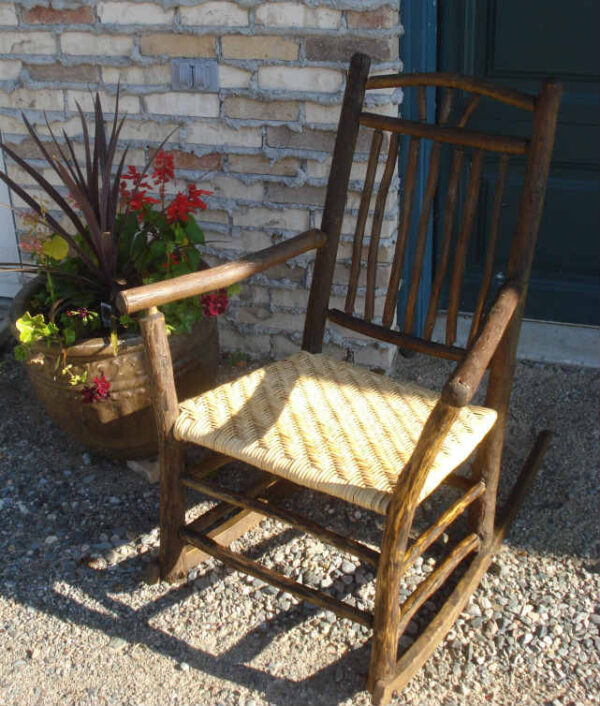
Chair caning, rush seat weaving and splint seats are all terms for different designs and techniques used in the process of weaving the seat of a chair, also called chair seating, or chair seat weaving.
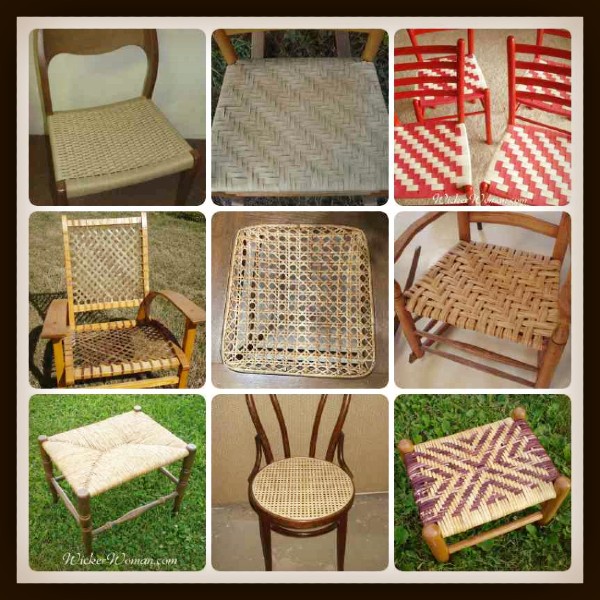
The term "chair seat weaving" encompasses many different types of weaving techniques, patterns and designs woven with a variety of weaving materials such as strand cane, cane webbing, rattan reed, paper rush, natural rush, ash or oak splint, Danish Modern cord, and Oriental seagrass.
These materials are then woven on wood frame seats and backs of chairs, rockers and settees. Look for Chair Caning instruction books to purchase through my Alibris Book Affiliate icon on the right if you’d like to weave your own chair seats!
And you can purchase materials through the Cane & Basket Supplies page, since The Wicker Woman does not sell supplies to the general public. Not ready to do your own seatweaving? Need an expert to do the reweaving on your family heirloom or flea market finds? Then take a look at the
Furniture Repair Directory-Seatweaving to locate an expert near you through this national directory.
Common Seatweaving Patterns and Designs:
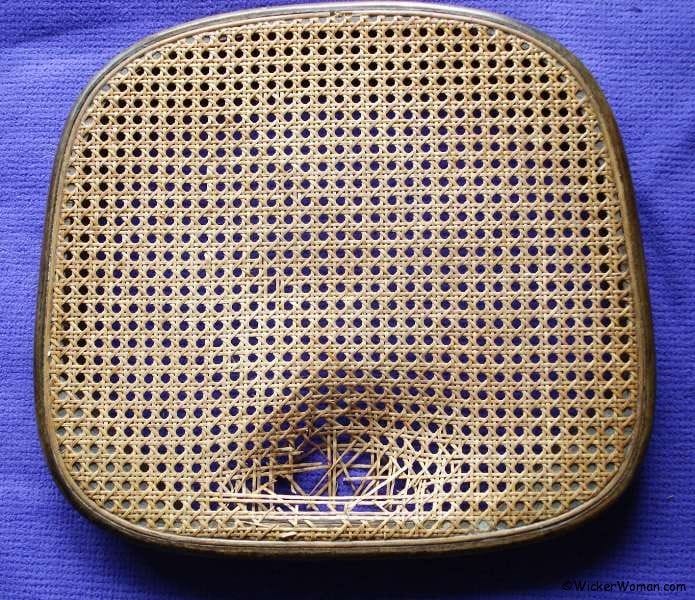
Traditional Hand Caning or Hole-to-Hole or Strand Caning
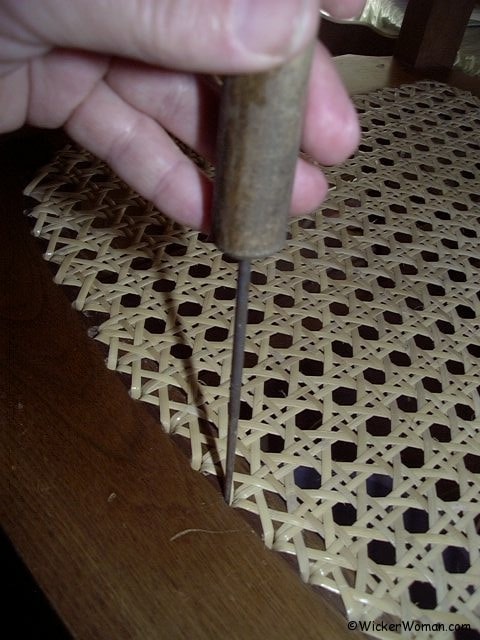
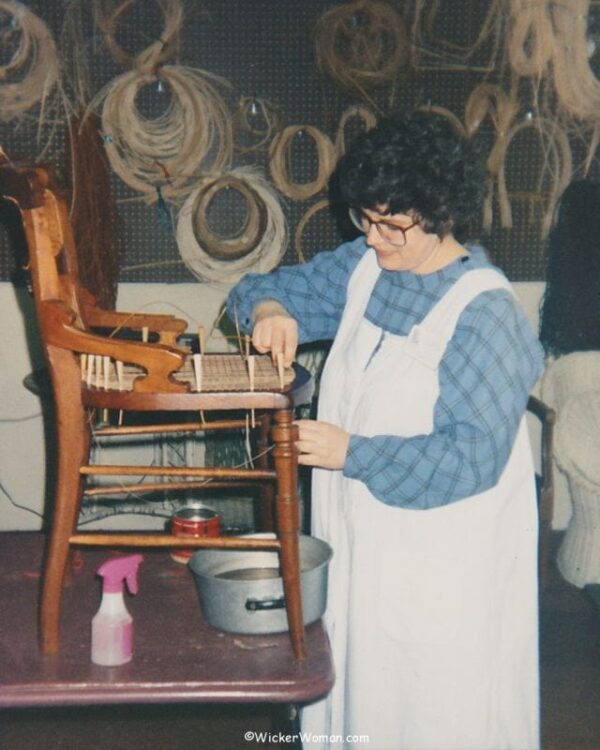
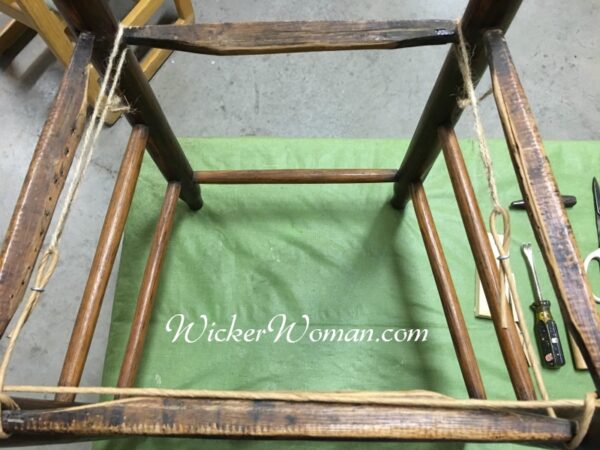
Strand or hand caning is the most well known of the seat weaving designs and patterns. The traditional seven-step method is woven by hand with individual strands of cane, through holes drilled in the perimeter of the seat, thereby creating the familiar octagon (8-sided), pattern. Many different gauges of cane are used to suit the design of the chair and size of the drilled holes, but all woven in the same 7-step pattern. It’s tedious and time consuming to weave, but a lovely, strong and durable pattern when completed. There are also many other designs that can be woven through the holes, but this one has proven to be the most durable and long lasting.
Spline, Pressed, Machine Woven, Sheet, Roll, or Webbing Cane
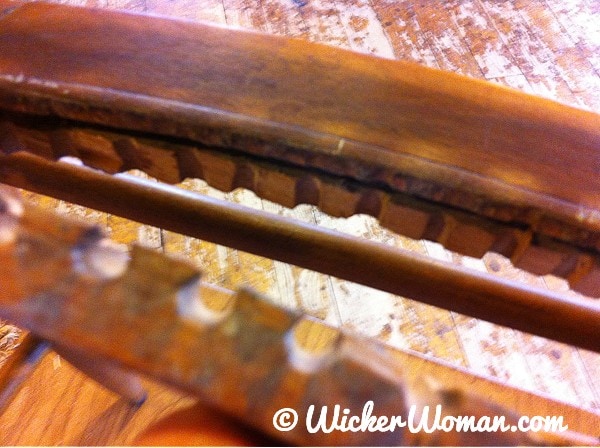
These are all names for cane that is prewoven on a loom, forming "sheets" of cane, pressed into a "groove" and held in place with reed "spline" and glue. This technique looks similar to hand caning in pattern, (and also comes in many variations), but the cane sits in a groove, rather than being woven through a series of holes in the frame. This loom woven technique of caning and mechanized groove cutting into the chairs was invented in the 1870s.
Fancy Cane–Spiderweb, Star of David, Daisy, and Snowflake Cane
Are all names of different fancy, intricate and advanced cane weaving designs. Since these weaves are not as durable as others, they are usually applied only to backs of Victorian chairs and rockers, rather than the seats. All are woven using at least two different gauges of cane to complete pattern. Save these design for the experts, they are not for the novice weaver!
Blind Caning, French Caning, Continental Caning
This type of chair caning is woven in the traditional 7-step method design, with regular strand cane, but the holes drilled in the framework do not go all the way through the wood. Blind Caning is usually reserved for use in the backs or under arms of chairs rather than in the seats, because it’s a delicate weave and not very strong. Since the holes do not go through the frame, each length of cane must be cut to the exact length needed and fixed in the holes with a plastic peg and a small spot of glue until set. Only one step can be done at a time, so the glue can set, making this a very tedious job indeed. Leave this one to the experts!
Porch Cane, Binder Cane, or Slab Rattan

This type of seatweaving is done with 4, 5 or 6 MM cane, or the larger slab rattan, in a basket weave or herringbone pattern around the four rungs or dowels that make up the seat. Sometimes the backs in rockers are also woven in this pattern with this material to match the seats. The cane strands look similar to hand cane strands, but these are much wider, and woven in a different weaving pattern than traditional hole-to-hole cane.
Splints, sometimes referred to as Splits, are prepared strips of ash, oak, reed or hickory bark, woven around the seat rungs or dowels of chairs and rockers, usually in a herringbone twill or basketweave design or pattern.

Rush–Natural Cattail Leaf or Bulrush and Paper Fibre Rush
The rush seatweaving technique uses either natural cattail leaf rush, bulrush or man-made paper fibre rush and is woven around the four seat rungs or dowels, forming four distinct triangles in the seat pattern. Museum pieces or fine old antique chairs are typically woven with bulrush or cattail leaves for authenticity, but because of the degree of difficulty in weaving, extensive time involved, and cost/availability of materials, it is quite expensive. Paper rush is used most often in newer or in chairs of lesser value.
Paper Fibre Rush is a man-made twisted paper product for use in weaving chair seats, that’s cheaper and easier to use than cattail leaves or bulrush. Paper twist or paper rush comes in a continuous strand and is very durable, lastly considerably longer than natural rush. It’s frequently used on weaving seats of Colonial style, mule-ear style and other post and rail modern chair seats, and also used in weaving wicker furniture from the 1910s-1940s.
Paper fibre rush, paper twist, or artificial rush as it’s sometimes called, was invented in 1904 when there was an embargo against importation of the rattan reed from the Orient. This embargo forced the wicker furniture manufacturers to search for an alternative construction material, and the newly invented synthetic twisted paper filled the bill.
Checkerboard Seagrass Seat Weaving
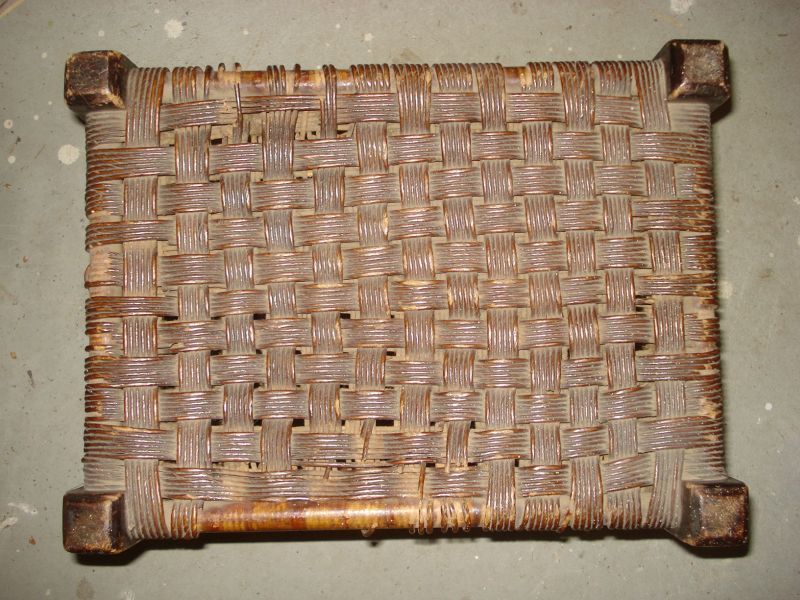
Checkerboard seats are usually woven with Oriental seagrass, rush, or Danish Modern cord in a checkerboard pattern. The chair in this photograph was woven in a checkerboard pattern using Oriental seagrass.
Lattice or Rustic–Open Seat Weaving
The rustic or lattice weave uses rawhide strips or sometimes flat reed splints that are woven on chairs, rockers, and couches in a very open weave. It looks similar to lattice work fences or panels, and is found frequently on rustic, Adirondack, or cowboy furniture.
The picture on the far left shows a Danish Modern teak chair, made popular in the 1950s, with seatweaving in progress woven with 2-ply laced Danish cord in a special basket weave design, sometimes called a checkerboard. Middle picture shows the chair weaving completed. Some chair designs incorporate a cord woven back as well as the woven seat. Another material frequently used in weaving Danish Modern chair seats is wide binding cane in either 4, 5 or 6 MM, woven on both the seat and back as in the picture on the near left.
SEATWEAVING and WICKER REPAIR DISCUSSION BOARD FORUM — Are you a chair seat weaver and want to connect with others across the country and Internationally? Whether you are a beginning chair seat weaver or a seasoned professional, join others in the fields of chair seating and wicker repair to discuss these nearly lost arts. Have questions about a technique? Need to get help on a business problem? Contribute whatever you can by either posing or answering questions. You can also just plain "lurk" and learn if you wish!
We certainly hope you’ve found this Seatweaving #101 page informative and helpful today. Please come back again soon to see what changes and additions have been made on WickerWoman.com!