
Wondering how to care for your cane furniture? Follow these helpful hints, tips and suggestions below to keep your cane seat chairs and cane furniture strong and supple for many long years of life and enjoyment.
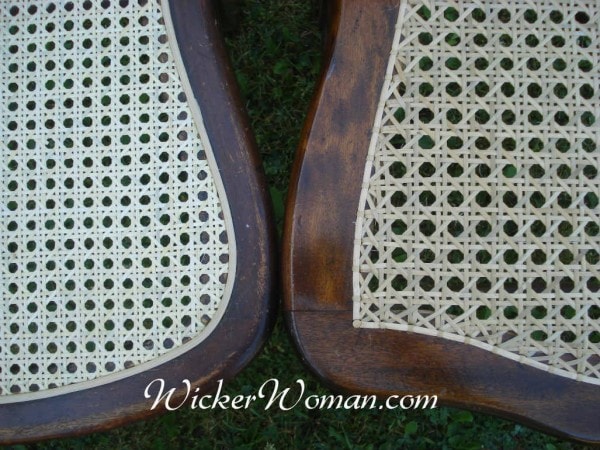
11 Handy tips–Keep Your Cane Furniture in Top shape
TWW is reader-supported, and as such, this article may contain affiliate links, which means that if you make a purchase using these links, I may receive a commission at no cost to you. As an Amazon Associate, I earn from qualifying purchases.
Keep cane chairs away from extreme heat & low humidity
These conditions could cause the cane to dry out, become brittle, and break. Also, avoid direct sunlight and heater ducts. Consider using a whole-room humidifier in the winter, which can be especially helpful to keep the air moist and not too dry.
Using a high-oil content furniture polish product when you dust helps to keep the cane supple, too. Lemon oil, orange oil, or mineral oil (use sparingly) applied to both the top and bottom of the cane seat a few times a year is usually sufficient.
Distribute body weight evenly on the cane seat
A cane seat is intended to take the evenly distributed weight of the person sitting on it, not concentrated weight, like a knee or foot. So NEVER kneel on a cane seat or use it as a ladder or step stool. Doing so will cause the cane strands to break and the seat will need to be rewoven prematurely.
Is your cane seat sagging?
Cane has natural elastic properties, but eventually, the caned seat will begin to sag with heavy or prolonged use. It is important to tighten the cane, or it will begin to wear and break along the inside edge of the seat frame, on both of the side rails, and the front and back edges.
Cane seats that are not too badly stretched or that are free of broken strands can be revived by turning the chair upside-down and applying a warm, wet cloth to the underside of the cane seat. Let the cloth and cane dry naturally overnight.
Remove the cloth the next morning, turn the chair upright, and don’t let anyone sit on it for at least 48 hours.
This treatment will dry and shrink the cane again, tightening it up in the process, taking the pressure off the inside wooden edges.
An alternative solution would be to use a spray water bottle and spritz the seat thoroughly with warm water. Then let the seat dry overnight and as it dries the cane will shrink and pull tightly once again.
Don’t allow anyone to sit on the chair seat for at least 48 hours until it’s completely dry.
This tightening process is most effective when used regularly within the first five years of recaning and won’t work at all if there are several broken strands.
Using this preventative method three or four times a year should be sufficient to help prolong the life of your cane seat chair for many years.
Use a chair pad or cushion on cane seats
To prolong the life of your caned seat, the use of a chair pad or cushion is encouraged. This especially pertains to large chairs with a seat diameter of greater than 14 inches.
A chair pad or cushion will distribute the weight evenly and take the pressure off the individual strands of cane, thus making them last longer.
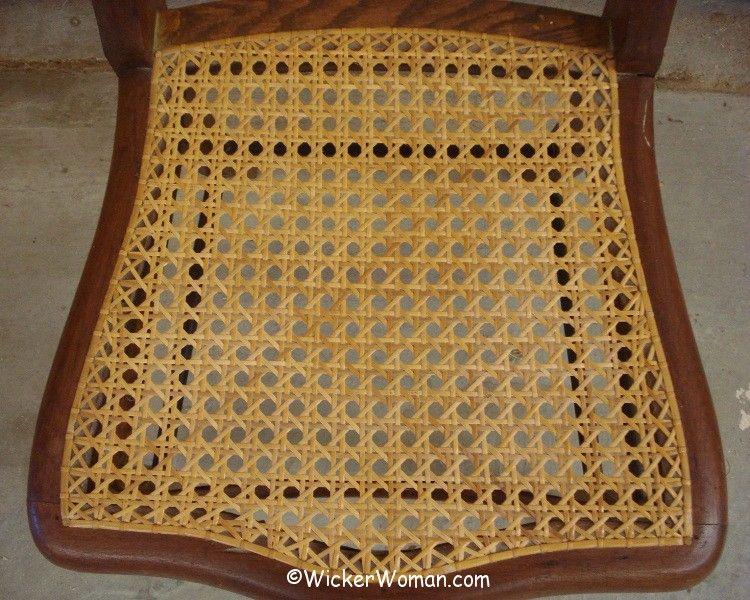
Keep cane seats clean, free of dust, dirt, and grime
Clean grimy or dirty cane seats with a wood soap such as Murphy’s Oil Soap or mild detergent in warm water, using a soft cloth or perhaps a soft-bristle brush.
Take care not to damage the wood surface with the water. Rinse well and then let the seat dry naturally on a warm, windy day to eliminate the possibility of mold and mildew setting in, which will damage and stain the cane.
Do not sit on the seat for at least 48 hours; otherwise, the cane will stretch out of shape.
Eliminate mold and mildew on your cane seats
If you notice mold or mildew growing on your cane furniture, use a strong solution of bleach or hydrogen peroxide (not both) in warm soapy water to clean. Or use the hydrogen peroxide on a q-tip swab to remove if there are only a few tiny spots.
Then rinse well and dry outdoors in the sunshine on a warm, windy day. Be careful not to spill the bleach solution on any surrounding wooden frame parts and wipe off any wooden surfaces immediately.
Take the precautions mentioned in this tip sheet to maintain moderate humidity so as not to attract mold and mildew.
Cane furniture storage and usage tips
Do not store or use cane or wicker furniture in high humidity areas or in wet areas where mold and mildew can present a problem.
Places to avoid are: basements, crawl spaces, up next to a wall, or on the porch pushed up next to the wall of the house where the furniture does not get adequate air circulation.
Caning a chair seat yourself? This tip will help!
Be sure to bevel or round off the inside edge of the chair seat frame. This applies to both the traditional hole-to-hole strand cane weaving method or the sheet cane, spline cane, or cane webbing method.
RELATED: HOW-TO CHAIR CANING INSTRUCTIONS
The inside wooden edge of the seat frame is usually a sharp 90-degree angle and may eventually cut the cane if this step is forgotten.
Use a small rasp, file, plane or Stanley Surform Shaver to pare down the edge and then smooth with sandpaper.
Final finish treatments not needed on cane seat
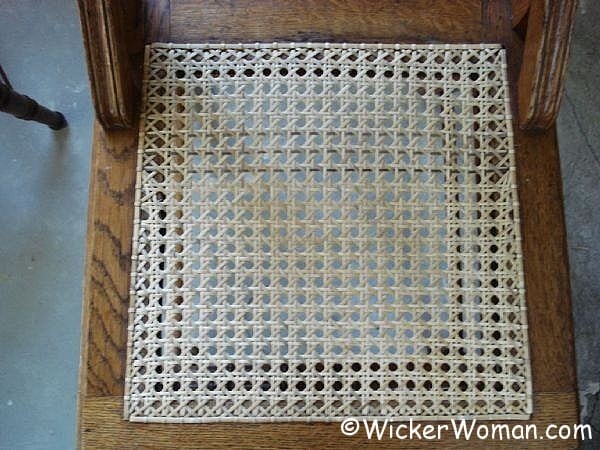
There is no need to apply a final finish to your newly caned seat, as chair cane has a naturally protective, glossy finish.
Traditionally, cane seats are left unfinished to allow the cane to absorb moisture from the air and remain flexible, expanding and contracting with the room’s temperature.
Although cane will darken with age on its own to a nice honey-brown golden color, it will take several years to achieve this.
If you feel you must apply some sort of finish, high oil content furniture polish products can be used successfully; lemon oil, orange oil and mineral oil.
Occasionally, tung oil varnish or even wax furniture polish is used as a finish on the cane without harmful effects.
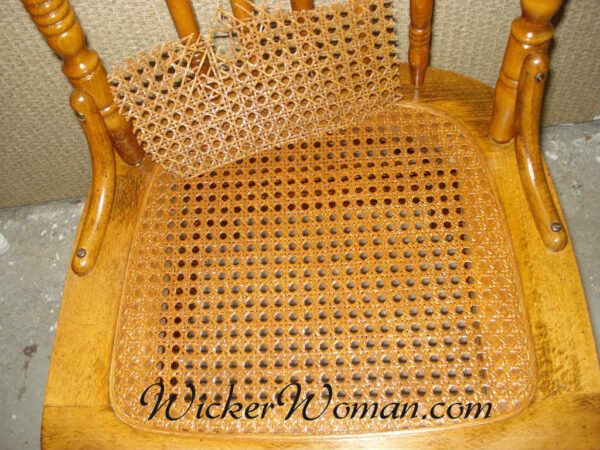
Want your newly caned seat to match others in a set?
If you prefer to hasten the darkening process of a newly recaned seat, or need to match a new chair seat to an existing set that is a dark color, use an oil-based stain (Minwax brand is good) and then a coat of lacquer or varnish can be applied over that.
RELATED: How to Install Cane Webbing
Do not apply a finish to the underside of the cane seat, though. The cane needs to “breathe” and expand and contract naturally.
Realize, too, that the finish may not match exactly; it may appear blotchy and will tend to dry out the cane, which may cause the seat to fail prematurely.
The preferred method of treating newly caned seats is to leave a cane in its natural state, without adding any final finish products.
How long should a cane seat last
With reasonable care, attention, and use, your cane-seated chair should last from 5 to 25 years. But if you notice a few broken strands or a hole getting bigger, place a padded cushion over the seat to extend its life by many more months or even years.
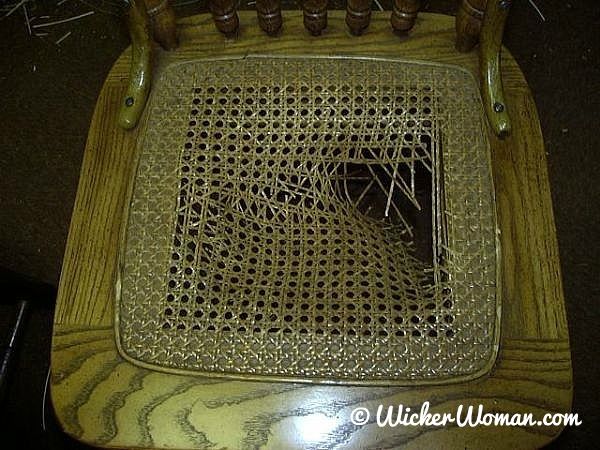
I recommend to all my customers that they keep using the chair until the entire seat (or a large portion of it) fails before they have it rewoven.
A couple of broken strands in the backs or under the arms can be replaced fairly easily. But don’t try to patch the cane on the seats because there’s too much pressure to hold up for long.
Not ready to DIY? Find a Chair Caning Pro here!
If you are not quite ready to go it alone and replace the damaged cane seat yourself, then check out all the Chair Caning and Seatweaving Pros on my National Furniture Repair Directory™.
Using the Directory is always free, so use it to locate your repair pro today! Please mention that you found them through their ad on WickerWoman.com!
###
We certainly hope you’ve enjoyed all these FREE articles, hints and tip sheets. Thank you for your kind support of this information resource website!

Articles, Tip Sheets, Reports <– Back
Next–> Chair Seat Weaving #101
Comments are closed.