Are you curious about what antique wicker furniture materials were used in constructing and manufacturing Victorian and Art Deco-era wicker furniture? In the following article, Cathryn explains what those materials are and also gives some historical backgrounds and comparison examples. Enjoy!
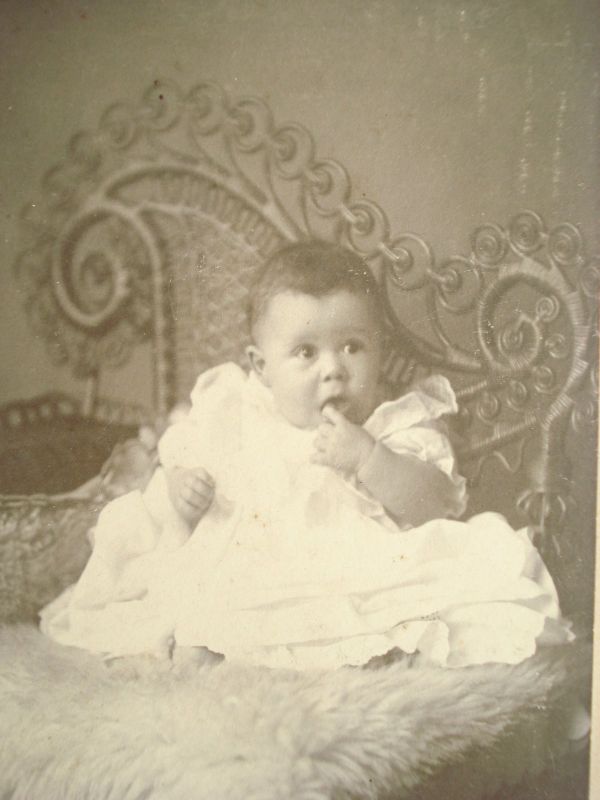
Wicker furniture pieces from the 1880s-1940s were made from good quality materials by exceptional craftsmen and are still highly regarded and sought after by wicker furniture collectors.
Rattan or Rotan
Rattan or rotan from the genus Calamus rotang L., is the primary material used in the production of wicker furniture and includes the entire pole–skin and all.
It has an outer thorny covering that must first be removed before exposing the skin or bark (cane), which has a natural glossy finish.
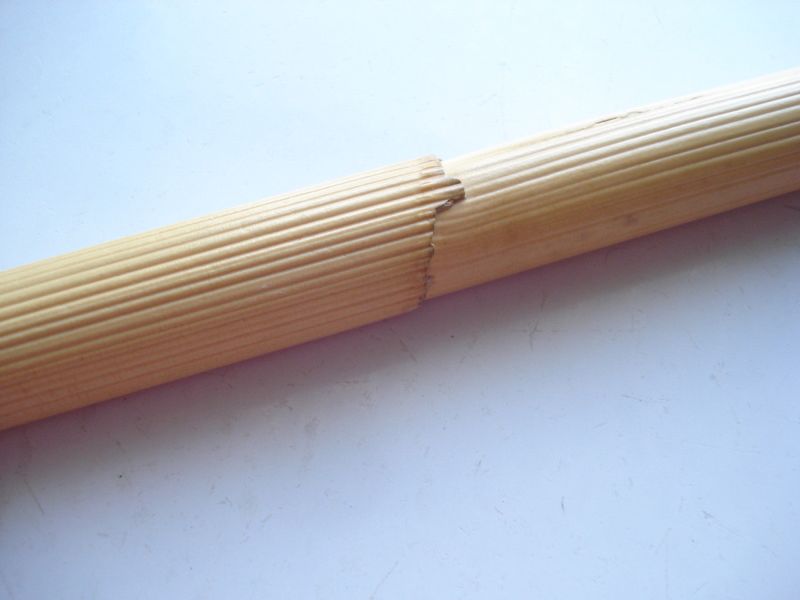
Rattan’s use in wicker furniture and basketry has been around since ancient times, and pieces have been documented back as far as 2500 B.C.
Rattan is imported primarily from Indonesia, China, Malaysia, the Philippines, and other parts of Southeast Asia, but it is not indigenous to the United States.
Rattan is a climbing vine that resembles our grapevine, in its behavior, growing along the jungle floor and through the trees. It can reach lengths of 600 feet and be four inches or more in diameter.
Generally, only 2″ – 3″ diameter poles are used for the framework of wicker furniture. And the inner pith is where the round and flat reed comes from, which is used in weaving wicker furniture.
Here’s a video from our friends at Former Glory and Seat Weaving Supplies in the UK, showing exactly what rattan is and how it is processed.
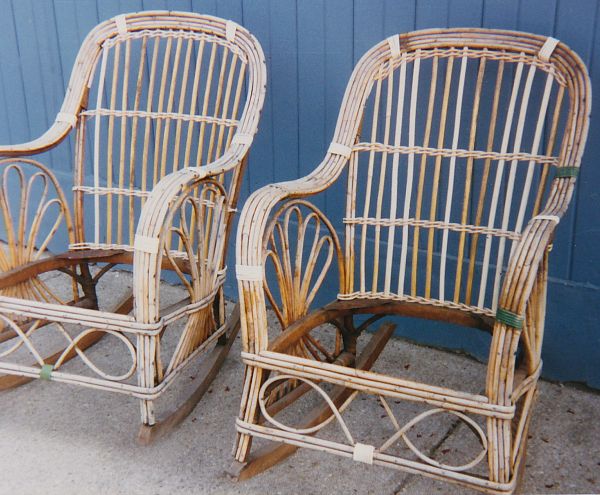
Steam-bent rattan was used as the framework for very early wicker furniture of the 1840s-1870s, “Stick Wicker” of the 1930s, and recent reproductions, including new rattan wicker furniture.
However, most antique wicker from the 1870s-1940s was made using hardwood frames, and is the most desirable.
Cane–the Outer Skin or Bark of rattan
Cane is the second layer, the skin or bark of the rattan palm after the outer thorns have been removed. Cane is a popular weaving material used primarily in seat weaving, and in wrapping joints of wicker furniture.
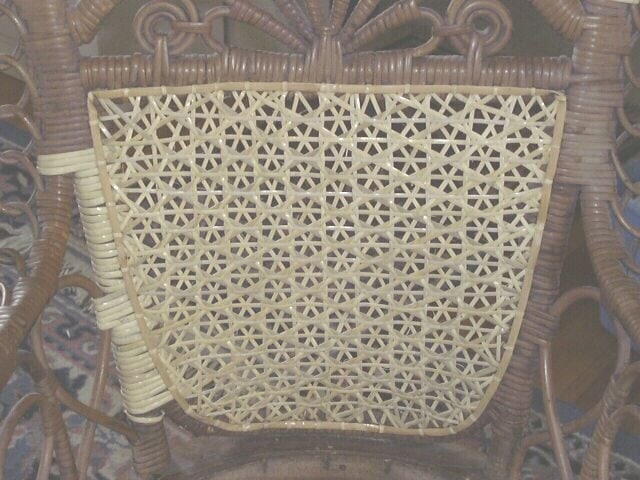
It is processed and sized into many different gauges, ranging from carriage fine to the largest slab rattan. Cane has a natural glossy finish and does not accept stains or paint well.
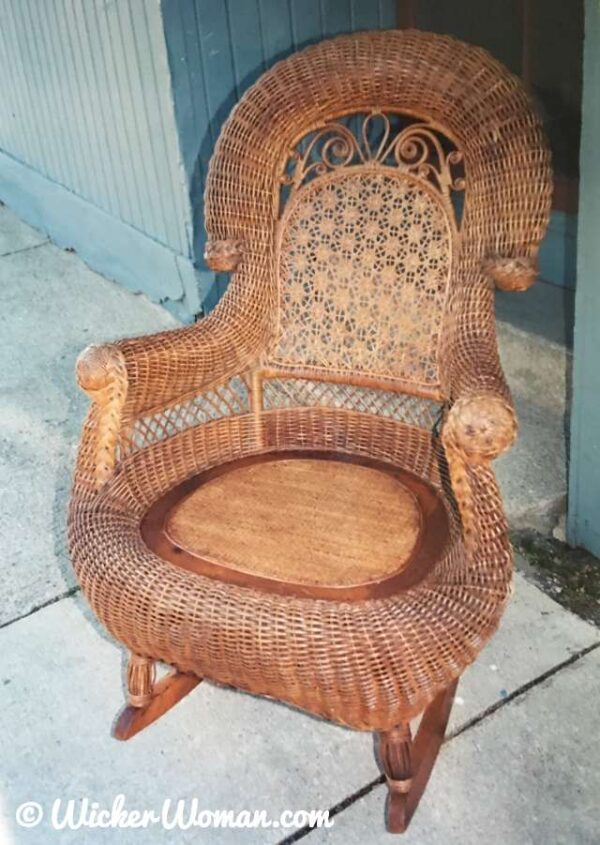
The Victorian reed wicker gentleman’s chair above shows a close-woven, set-in, machine-woven cane seat.
This closed cane webbing was used extensively to avoid detracting from the intricate, heavily embellished Star of David Cane pattern on the wicker furniture of the time.
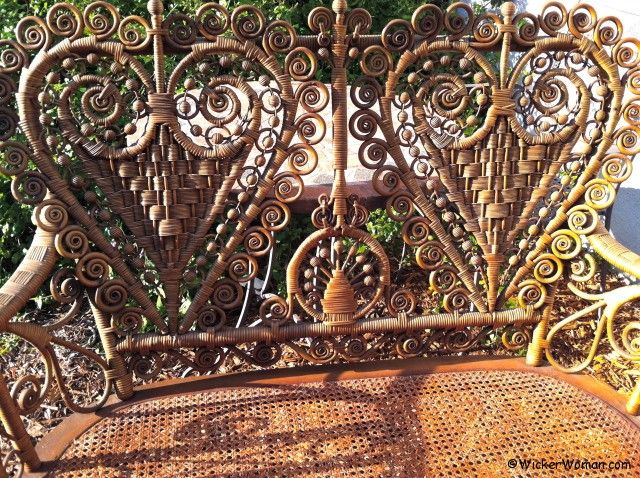
Most, if not all, wicker furniture of this era was made with a strong hardwood frame, rather than the weaker rattan of earlier periods.
Reed–From the Inner Pith
Reed is the inner pith of the rattan palm and looks similar to a wood with a lengthwise “grain” to it, and will snap and break if bent to the extreme.
It is a versatile material that comes in all sizes and dimensions, so it is used in basketry as well as wicker furniture, appearing as spokes, weavers, curlicues, and embellishments.
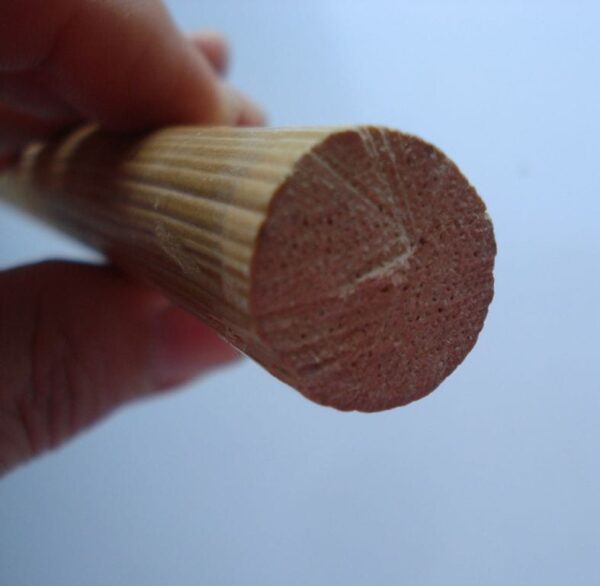
Once the outer glossy cane skin has been removed, the inner pith or core of the rattan (the reed) is a porous material that accepts stains, paint, or final finishes such as varnish or lacquer very well.
Because of its versatility, reed was one of the major materials used in the manufacture of fancy Victorian wicker before the 1880’s.
Bamboo
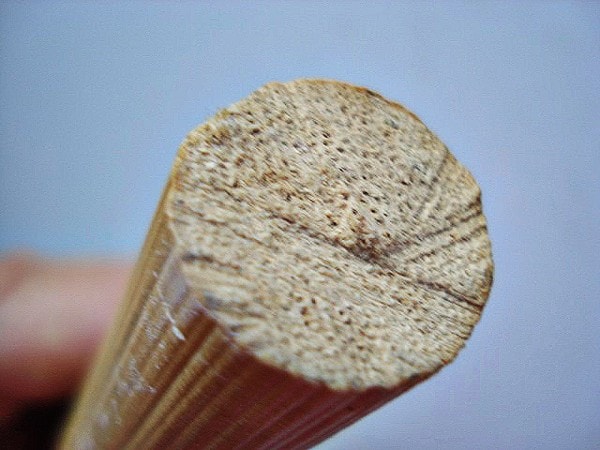
Bamboo resembles rattan and is often mistaken for it. However, one of the biggest differences between the two materials is that bamboo has a hollow core center, and rattan has a solid core center.
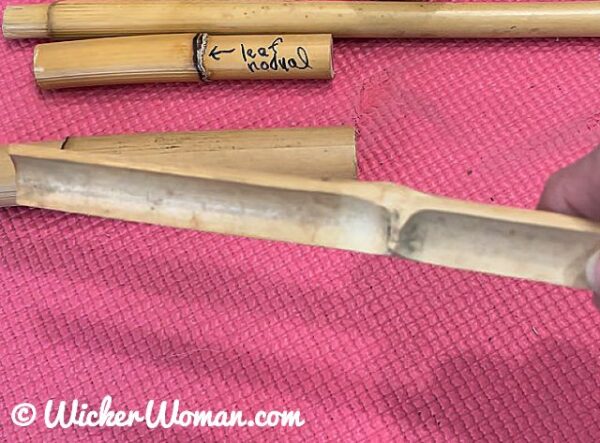
Also, where the leaves were attached to the bamboo, there are distinctive dark-colored ridges, whereas on the rattan, the leaf areas are not so pronounced and visible.
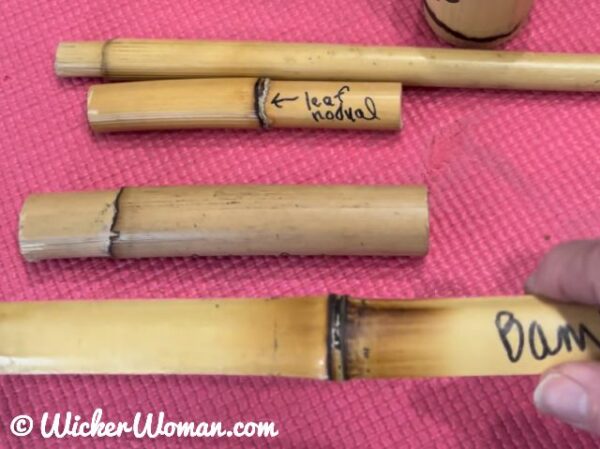
Bamboo tends to split and break more easily than rattan, so it is not used as often as rattan in furniture construction.
Paper Fibre Rush or Paper Wicker
Paper fibre rush wicker, on the other hand, is a man-made paper product invented in 1904. The unusual spelling of “fibre” denotes that the product is not natural but instead man-made.
Paper fibre or “fiber reed” was used extensively in the early 1900s when China had an embargo on the exportation of rattan reed, making it hard for suppliers to source good quality rattan.
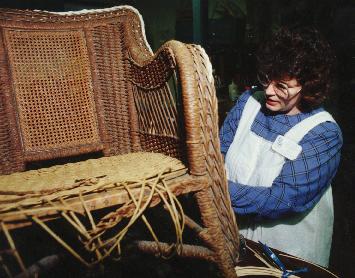
Since wicker manufacturers used rattan reed in their wicker furniture and could no longer obtain it, the man-made product became a substitute for natural rattan reed wicker and remained popular for decades.
Paper rush resembles a rope or cord and comes in a continuous length, so is advantageous to use in weaving a rush seat. It has a distinctive “barber-pole” or diagonal twist to it and can be unraveled.
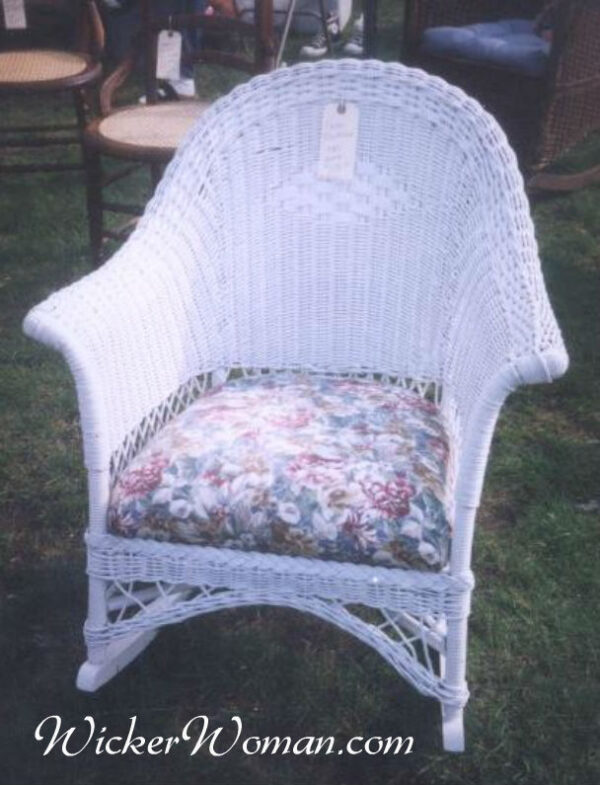
Paper fibre rush, sometimes referred to as “Art Deco” paper fibre reed wicker or paper wicker, nearly took over in popularity of the natural reed wicker during the 1920s and early 1930s.
Here’s a video made by our friends and Cane and Basket Supplies advertisers, Peerless Rattan Company on how paper fibre rush is manufactured:
This same type of twisted paper fibre was, and is currently used in weaving rush chair seats. It was meant to resemble a natural bulrush or cattail leaf rush woven seat.
In the mid-1930s, a wire core was added to the paper fibre strands to reinforce the weight-bearing spokes of the wicker furniture pieces.
Lloyd Loom Paper Wicker
Lloyd Loom paper fibre wicker was invented in 1917 and became extremely popular during the 1920s-1930s.
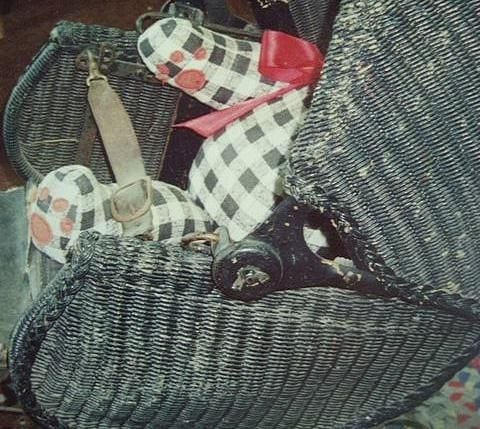
It was made of spaghetti-like strands of paper rush, closely woven on a big loom and resembled fabric. The “fabric” was then draped over the framework and attached with tacks and covered with a braid. During the later years, the wire core was added and used in heavy weight-bearing areas of the pieces.
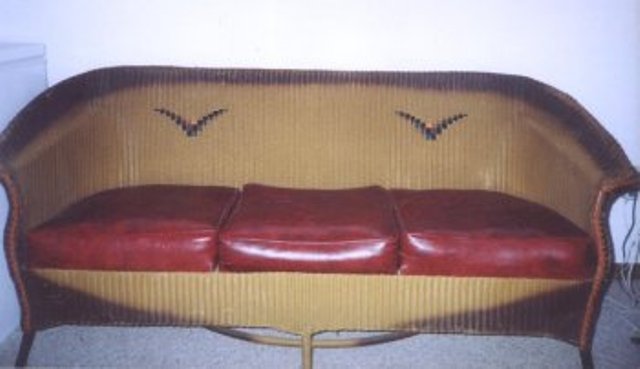
Lloyd loom “sheets” and “fabric” appeared on all types of wicker furniture, couches, chairs, tables, lamps, baby and doll buggies, planters, footstools, smoking stands, and tea carts, to name a few and remains a favorite for the “vintage” collector.
Thank you very much for your donation for support for the FREE Wicker Furniture Materials article on WickerWoman.com! Thanks for stopping and please come back often to see the additions and updates!
Articles, Tip Sheets & Reports <– BACK