The Wicker Woman header image

'wicker'

Victorian Heart Shaped Wicker Set-part 3

October 12th, 2011 · 1 Comment · Weavin' Wicker Woman Blog

WEDNESDAY WICKER WISDOM-Continued from last week’s post–It seems that I was the only person to respond to Patty’s inquiry about their newly acquired wicker set. Since she wanted to research the pieces before they sold them, she had contacted several antique dealers and wicker repair experts in her area, but got no response.

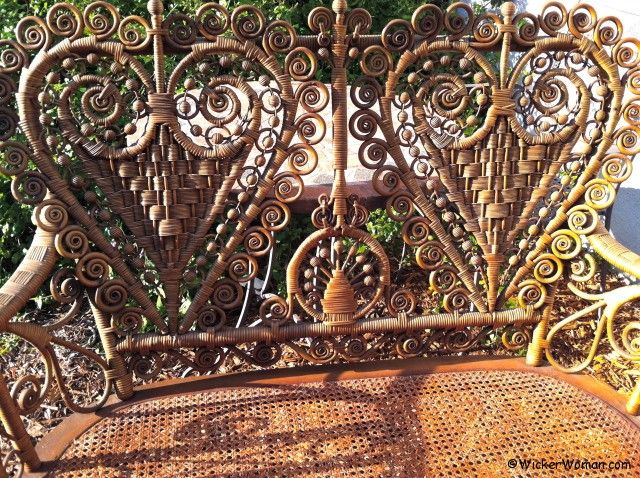
Victorian wicker heart-shape settee

1890s Victorian Heart Shaped Wicker Settee

Then she got on the Internet and found me through my volunteer wicker column through AllExperts.com. Although it’s difficult to determine age and condition from photographs alone and not examine the wicker pieces in person, I thought this set might be the genuine thing.

heart-wicker-label-settee-2

Label from the wicker settee.

I looked over the pictures she sent me and was convinced that this set was an authentic antique from the 1880s and intrigued that it seemed to be in such good condition and never painted! The set had all the antique characteristics with the:

  • manufacturer’s paper label (although hardly readable)
  • frames were made out of steam-bent wood, not rattan poles
  • cane webbing seats were (for the most part) original with the close-woven inserts
  • leg braces were sturdy and no fiber board or melamine sheets were used underneath
  • curlicues were all original and perfectly formed
  • well-used brass leg caps

heart-antique-wicker-bottom-man-chair

Late 1800s bracing under Victorian wicker gentleman's chair

heart-antique-wicker-fancy-leg-wrap

Brass leg cap and wrappings on Victorian heart-shaped wicker set

heart-antique-wicker-fancy-leg-curlicue

Victorian wicker leg wrappings, curlicues, beads

The post will be continued next week on the WEDNESDAY WICKER WISDOM post in Part 4, so stay tuned…

If you need a refreshment on the previous posts, just click on this link from last week–

http://www.wickerwoman.com/antique-victorian-wicker-heart-set-wednesday-wicker-wisdom.html

Enjoy! Please SUBSCRIBE to this blog so you don’t miss any more posts! Sign-up at the top right hand side of the blog.

[Read more →]

WEDNESDAY WICKER WISDOM – Antique Wicker Eras

October 29th, 2009 · Comments Off · Weavin' Wicker Woman Blog


When I first started repairing antique wicker furniture back in the mid-1970s, I would get in a lot of Victorian wicker pieces, that quickly became my favorite pieces to restore. My favoritism was due to the excellent craftsmanship of the period and the use of first-growth quality cane and reed materials.

But there are several other styles made in various eras that you might be interested in hearing about and seeing some pictures of. Although wicker pieces have been made since the beginning of recorded history, I will just be talking about the American wicker furniture industry from the 1840s-1940s here in this blog post.

I just looked on my computer for pictures of all these eras and I must have taken some pictures off and put on CDs, so I don’t have pictures to go with all these eras right now, sorry. But here goes with the descriptions and pictures I can supply.

Early Wicker 1840s-1860s — Was light, airy, typically made from rattan and willow and was simplistic in design. Except for the elaborate distinctive esparto braided(made from very fine, thin willow osiers), design made by the Colt Willow-Ware Manufactory. (Couldn’t find the photo for this Early Wicker)

Victorian Wicker 1870s-1890s — Made with rattan and reed (the inner pith of rattan), characteristically heavily embellished with scrolls, curlicues, beading, chain loops, Spider Web and Star of David cane backs, close woven “set-in” machine cane webbing for seats. Enormously popular during this time was the wicker baby carriage or “perambulator.” Called the “Golden Age of Wicker” during the later part of the century.

Victorian Parlor Set

Turn of the Century or Progressive Age 1900s-1915s — This era welcomed in a decidedly different style with the ever popular reed, but also with the reintroduction of willow. Styles changed to the simple, sleek look of the reformist, Progressive era called the “Mission,” “Craftsman” and “Bar Harbor” styles. With open weave lattice-look devoid of embellishment, this wicker was popular furniture for summer cottages and Adirondack lodges and seaside resorts. And in 1904, the invention of the paper fibre was introduced and later, wicker furniture frequently sported upholstery fabrics.


Bar Harbor Reed Wicker

Machine Age or Modern Age 1915s-1930s — In 1917 the mechanized Lloyd Loom was invented, producing woven paper fibre “sheets” or “fabric” and took the industry by storm. Not only did this machine lessen the cost of the hand-woven wicker for the customer, but made massive amounts of easily affordable wicker available to the public.


Lloyd Loom Couch and Baby Cart

Both the machine-made Lloyd Loom wicker and the hand woven paper wicker were now painted and during the 1920s often featured diamond patterns in the backs and sides called the “Art Deco” style. Set-in upholstered cushions were the rage in couches, rockers and chairs, then. And later during the 1930s, yet a new style was introduced the Modernist “stick wicker,” made from sticks of reed and willow.

Art Deco Style Paper Wicker


Stick Wicker

During the later 1930s and into the early 1940s, wicker furniture took a drastic turn with the advent of tubular steel “modern” furniture and then totally lost favor with the buying public.


But, luckily wicker furniture seems to makes a resurgence in popularity about every 25 years or so. And now there are also some excellent reproductions being made, as well as good quality all-weather pieces for you to use outdoors.


Please take care of your antique and collectible wicker furniture and never leave it outdoors, because as I always say, “Once those fine old wicker pieces are gone they are gone forever. You can’t “make” new antique wicker.”

Check my website Articles tab for helpful hints and tips on caring for your wicker, painting wicker and other interesting details on cane and wicker furniture.

[Read more →]

Dovetail Antiques in Northeast Antiques Publication

June 5th, 2009 · Comments Off · What's New

Victorian wicker rocker backCongratulations to Peter and Susan Tanzini of Dovetail Antiques, New Jersey, who are listed on the Furniture Repair Directory. They just had an article entitled, “Antique Wicker Restoration,” published in Northeast Antiques.

[Read more →]

WICKER WEDNESDAY WISDOM!

April 15th, 2009 · Comments Off · Weavin' Wicker Woman Blog

Here’s a bit about the wicker furniture industry that I bet you didn’t know…


That the wicker furniture industry actually began right here in the United States in the 1840s!

Although wicker furniture had been made throughout the ages and was even found inside the pyramids, Boston grocer Cyrus Wakefield was the first to actually begin the industry of wicker furniture manufacturing.

He devised a method of making wicker furniture from bunches of rattan reed that were used as dunnage to protect cargo on sailing ships. This pliable material was being discarded and thrown overboard after serving its purpose of protecting cargo.

The enterprising man bought the rattan, began making woven furniture out of it and started the business that later became the Wakefield Rattan Company, the first, largest and best known wicker furniture company in the industry!

Related Posts Plugin for WordPress, Blogger...

[Read more →]

What's New | Antler Baskets | Antler Basket Patterns | Cathryn's Classes | Repair Pricing-Charges | Weavin' Wicker Woman Blog
National Furniture Repair Directory™ | Cane & Basket Supplies Directory™ | Events Calendar | Advertise with Us!
Useful Links | How-to YouTube Videos | How-to Articles | Testimonials | Site Map | Privacy Policy | About Us | Contact Us | Homepage